Calories in common foods: a quick-reference guide
By Artem Grebenkin, founder of Bocco · · 6 min read
The short version: a plain grilled chicken breast (100g, skinless) runs about 165 calories, a medium banana is about 105, and a tablespoon of olive oil is 119 — more than the banana, in a fifth of the volume. The full reference table is below. What matters more than any single number is that none of these figures are as fixed as they look on the page — cooking method and portion size can move them by 50-100%.
Here's the fuller table by category, and then the part worth actually understanding.
The quick answer
Typical values for the plain, minimally prepared version of each food — no sauce, no oil added unless noted. Source: USDA FoodData Central.1
| Food | Typical serving | Calories |
|---|---|---|
| Chicken breast, cooked, skinless | 100g | ~165 |
| Egg, large | 1 (50g) | ~72 |
| Salmon, cooked | 100g | ~208 |
| Greek yogurt, plain, nonfat | 170g container | ~100 |
| White rice, cooked | 100g | ~130 |
| Oats, dry | 40g | ~150 |
| Bread, white | 1 slice (28g) | ~75 |
| Banana | 1 medium (118g) | ~105 |
| Apple | 1 medium (182g) | ~95 |
| Avocado | 100g | ~160 |
| Broccoli | 100g | ~34 |
| Olive oil | 1 tbsp (14g) | ~119 |
| Almonds | 28g (~23 nuts) | ~164 |
| Peanut butter | 2 tbsp (32g) | ~188 |
| Cheddar cheese | 28g | ~113 |
If you eat a lot of one of these, it's worth knowing by heart. If you don't — and most people's diets are more varied than any single table can cover — the number you actually need is for the plate in front of you right now, cooked the way you cooked it, at the size you're actually eating. That's the part a static list can't give you.
Why the same food never has exactly one calorie number
Cooking method and added fat
"Chicken breast" at 165 calories assumes it's grilled or baked dry. Pan-fry the same piece in a tablespoon of oil and you've added roughly 120 calories before you've changed the meat itself. Bread it and deep-fry it and a 165-calorie food can easily become a 350-calorie one — see the bars above. The chicken didn't change; what you did to it did. Same story for vegetables sautéed in butter, rice cooked in stock with oil versus plain water, or "grilled" restaurant chicken that's actually basted.
Portion size vs. the "per 100g" trap
Nutrition databases default to 100g because it's a clean unit for comparison, not because that's what's on your plate. A restaurant chicken breast is routinely 170-220g, not 100g — so the "165-calorie chicken breast" people quote from memory is often closer to 300 in practice. Weighing or estimating the actual portion matters more than getting the per-100g number exactly right.
There's also a regulatory reality worth knowing: under US law, packaged-food calorie declarations are allowed to vary from the true value by up to 20% and still be compliant (21 CFR 101.9, the FDA's nutrition-labeling rule).2 So even the number printed on a box isn't a lab-exact measurement of the food in your hand — it's a legally permitted estimate. That's not a reason to ignore labels; it's a reason to treat every calorie number, including the ones in this article, as a good estimate rather than a fact carved in stone.
Calories in common foods, by category
- Protein — chicken breast (100g, cooked): ~165 · salmon (100g, cooked): ~208 · egg (1 large): ~72 · Greek yogurt, plain nonfat (170g): ~100 · ground beef, 85% lean (100g, cooked): ~250 · tofu, firm (100g): ~76
- Carbs & grains — white rice, cooked (100g): ~130 · pasta, cooked (100g): ~131 · oats, dry (40g): ~150 · bread, white (1 slice): ~75 · sweet potato, baked (100g): ~90
- Fruit & veg — banana (1 medium): ~105 · apple (1 medium): ~95 · avocado (100g): ~160 · broccoli (100g): ~34 · mixed leafy greens (100g): ~20-25
- Dairy & fats — cheddar cheese (28g): ~113 · whole milk (1 cup, 244g): ~149 · olive oil (1 tbsp): ~119 · almonds (28g): ~164 · peanut butter (2 tbsp): ~188
These are still typical values for the plain version. A restaurant Caesar salad is nowhere near "broccoli + chicken" math once the dressing, cheese, and croutons are counted — often 500-700 calories for what looks like a light lunch.
Memorizing numbers vs. just checking each meal
A table like this is genuinely useful for the handful of foods you eat on repeat — your usual breakfast, your go-to protein. But most days aren't made of foods from a memorized list; they're a mix of home cooking, restaurant meals, and things you didn't make yourself, in portions that change every time. Trying to mentally track "165, minus the oil I can't measure, times a portion I'm guessing at" for every meal is exactly the kind of friction that makes people quit tracking within a couple of weeks — we hear this from almost every user who tried a food database before Bocco.
How Bocco helps
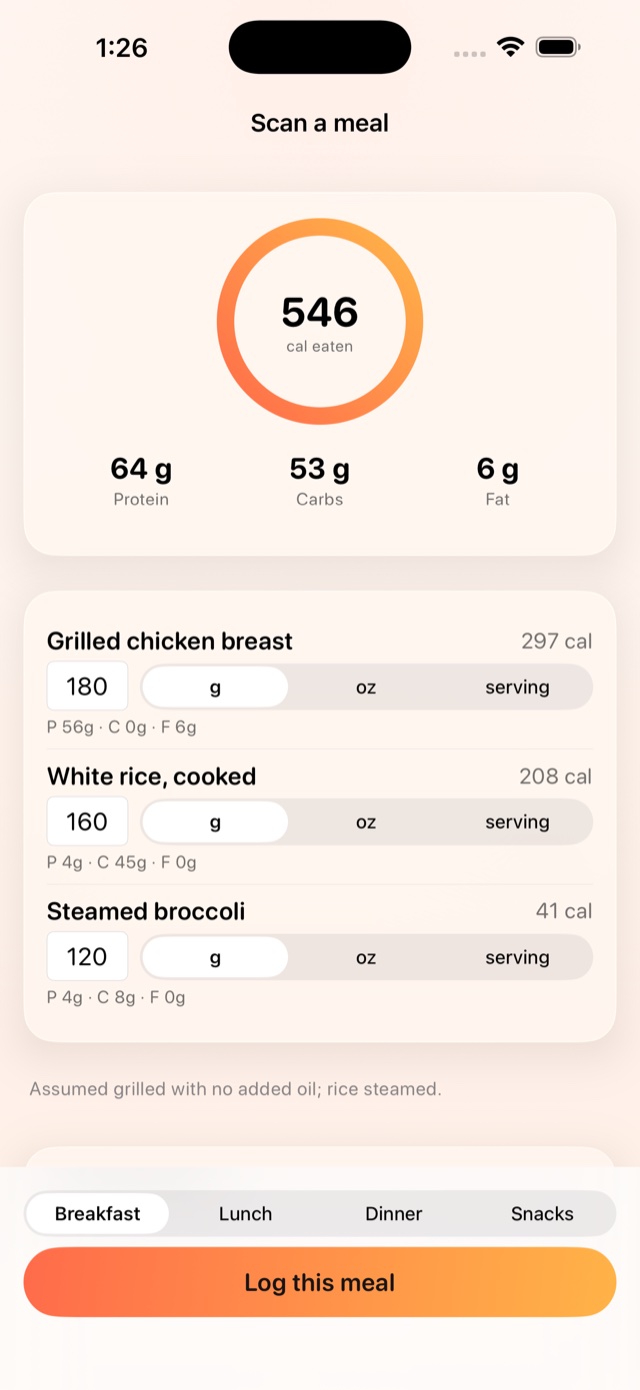
This is where a photo beats a memorized table. Take a picture of your actual plate — cooked the way you cooked it, at the size you're actually eating — and Bocco estimates the calories and macros directly from the photo, no lookup required. It won't be a lab measurement any more than the label on a box is (see the 20% tolerance above — nobody's is), but it's estimating your food, not a 100g reference version of it. And if it gets an item wrong, you correct it in a sentence and the whole entry recalculates — no re-entering the meal from scratch.
Frequently asked questions
How many calories are in a chicken breast?
A 100g cooked, skinless chicken breast is about 165 calories. A typical restaurant portion (170-220g) is closer to 280-360, and that climbs further if it's pan-fried, breaded, or basted in oil.
Are the calorie counts on packaging exact?
No. US labeling law (21 CFR 101.9) allows a declared calorie value to differ from the true value by up to 20% and still be compliant. Treat every printed or looked-up number as a solid estimate, not an exact measurement of the specific food in front of you.
What's the easiest way to track calories in foods that aren't on a standard list?
A photo of the plate. It skips the lookup-and-math step entirely and estimates the food as you're actually eating it — cooked, portioned, and mixed the way real meals usually are.
Sources: 1 USDA FoodData Central · 2 21 CFR 101.9, FDA nutrition-labeling regulation, via eCFR.
This article is for general information only and isn’t medical advice. For guidance about your own health, talk to a doctor or registered dietitian.