High-protein, low-calorie foods: the real list
By the Bocco team · 6 min read
The short version: the foods that pack the most protein per calorie are mostly lean animal proteins — egg whites, skinless chicken breast, white fish, shrimp, cottage cheese, and plain Greek yogurt all land 20-30g of protein for well under 200 calories per 100g. Plant options like lentils and edamame carry less protein per calorie, but they bring fiber to the table that the animal picks don't.
Here's the actual ranking, with real numbers, and how to build a plate around it.
What "protein density" means (and why it's the number that matters)
Most "high protein, low calorie" lists just throw 40 foods at you with no logic behind the order. The number that actually matters is protein density — how many grams of protein you get per 100 calories. A food can be "high protein" and still be a bad pick if it drags in a lot of fat and calories along with it (looking at you, regular ground beef and whole-egg omelets).
Ranking by protein density instead of just protein grams tells you which foods let you hit a protein target without spending your whole daily calorie budget getting there — which matters most when you're also trying to keep those calories down. It's not just a bookkeeping trick: research on protein and weight management links higher-protein eating to better satiety and more lean-mass retention during a calorie deficit, which is exactly the situation protein-dense foods are built for.2
The foods, ranked by protein per calorie
Figures below are rounded, commonly-cited values from USDA FoodData Central, the federal nutrient database.1 Actual numbers vary a little by cut, brand, and cooking method — use these as planning numbers, not lab-precise ones.
Animal-based picks
- Egg whites — ~52 kcal, 11g protein per 100g (about 17 kcal / 3.6g protein per large egg white). The single most protein-dense common food — almost pure protein, almost no fat.
- Skinless chicken breast, cooked — ~165 kcal, 31g protein per 100g. The default for a reason: cheap, versatile, and close to the top of the list.
- White fish (cod), cooked — ~105 kcal, 23g protein per 100g. Leaner than most cuts of chicken, gram for gram.
- Shrimp, cooked — ~99 kcal, 24g protein per 100g. Almost no carbs or fat, and it cooks in minutes.
- Canned tuna in water, drained — ~100 kcal, 23g protein per 100g. The pantry option — no cooking required.
- Turkey breast, cooked, skinless — ~135 kcal, 30g protein per 100g. A close cousin to chicken breast.
- Nonfat plain Greek yogurt — ~59 kcal, 10g protein per 100g. Lower protein density than the meats above, but it's a snack, not just an ingredient — and the plain, unsweetened kind is what keeps the calories down.
- Low-fat cottage cheese — ~72 kcal, 12g protein per 100g. Underrated; works savory or sweet.
Plant-based picks
- Edamame, cooked — ~121 kcal, 12g protein per 100g.
- Lentils, cooked — ~116 kcal, 9g protein per 100g.
- Tofu, firm — varies more by brand than most foods on this list, but typically lands lower in protein density than the animal options above.
Here's the honest trade-off, not a hedge for its own sake: gram for gram, plant proteins lose to lean animal proteins on pure protein density. What they bring instead is fiber — something egg whites and chicken breast have zero of, and something that matters just as much for staying full on fewer calories. A meal built entirely from the top of this list can still leave you looking for something green.
How to actually build a meal around these
A worked example, not just a list: a lunch of a palm-and-a-half of chicken breast (~90g, ~150 kcal, ~28g protein), two fists of steamed vegetables (low-calorie bulk, not much protein), a cupped hand of lentils (~100g, ~116 kcal, ~9g protein), and a spoon of olive oil for the fat you still need — lands around 400-450 calories with roughly 37g of protein. That's a third of a 110g/day protein target from one meal, without the calorie count doing anything alarming.
How Bocco helps
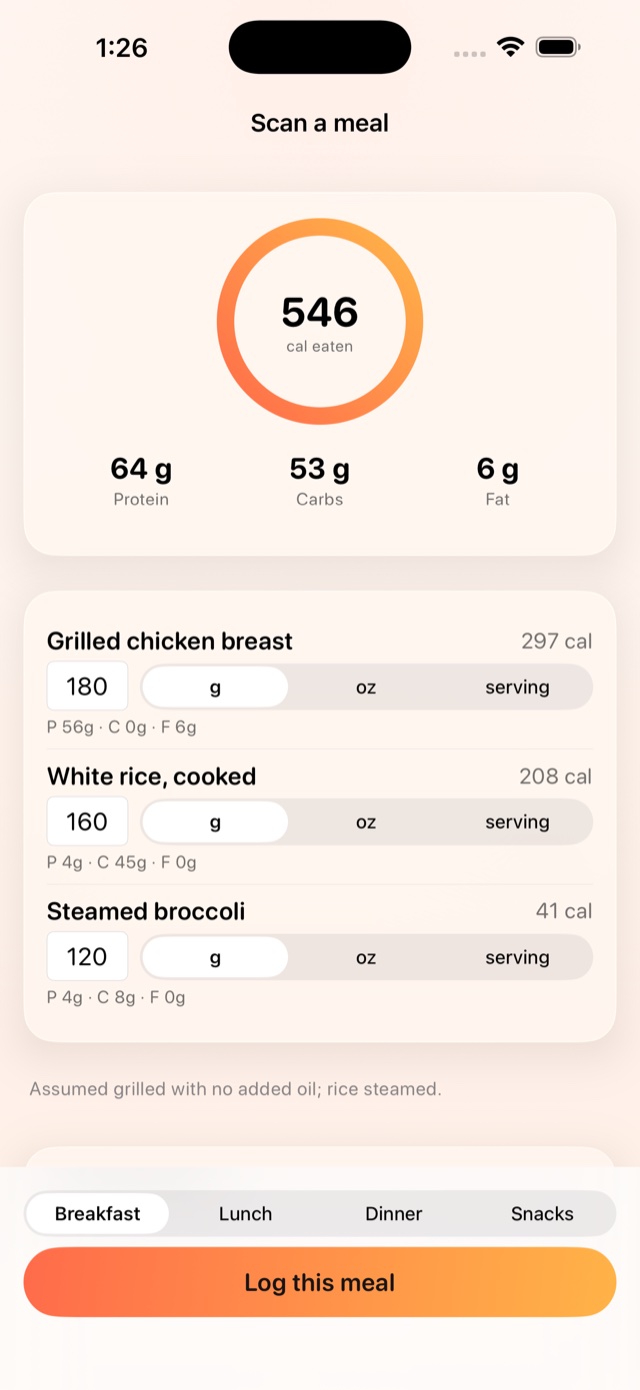
Picking protein-dense foods is the easy part; tracking whether you actually hit your number across a whole day is the part that gets tedious fast. Bocco reads a photo of your plate and returns protein grams alongside calories, so you can see where the day stands without doing the per-100g math yourself at every meal. If a portion estimate looks off — the chicken was a bigger cut than it looks, or there was more oil in the pan than usual — you correct it in a sentence and the numbers recalculate.
Frequently asked questions
What is the highest protein food with the fewest calories?
Egg whites and skinless chicken breast are near the top of most lists — both deliver roughly 20-30g of protein for somewhere between about 50 and 165 calories per 100g, depending on the food.
What foods have 20g of protein and under 200 calories?
A 100g serving of chicken breast, a can of tuna in water, or a large handful of cooked shrimp all land in that range.
Are plant-based proteins as calorie-efficient as animal ones?
Not usually gram-for-gram — lentils and edamame carry less protein per calorie than chicken or fish — but they bring fiber, which most high-protein animal foods don't.
Can I lose weight just by eating high-protein, low-calorie foods?
Not on their own — weight loss still comes down to your total calories for the day. What these foods do is make it easier to hit a protein target without spending your whole calorie budget getting there.
Is Greek yogurt a good high-protein, low-calorie snack?
Yes — plain nonfat Greek yogurt is one of the more protein-dense dairy options, roughly 10g of protein for about 59 calories per 100g.
Sources: 1 USDA FoodData Central · 2 Leidy HJ et al., "The role of protein in weight loss and maintenance," American Journal of Clinical Nutrition, 2015.